Brand memory
Repeatable styles turn AI from a generator into a brand system
Without saved styles, every generation starts from scratch. The team writes the same brand rules again, hunts for a similar look, and spends review time explaining why the result is "close, but not it".
Custom AI styles preserve decisions that have already worked. The next prompts get a stronger starting point, and reviewers find it easier to evaluate the result.
Repeatable characters need rules, not just a reference
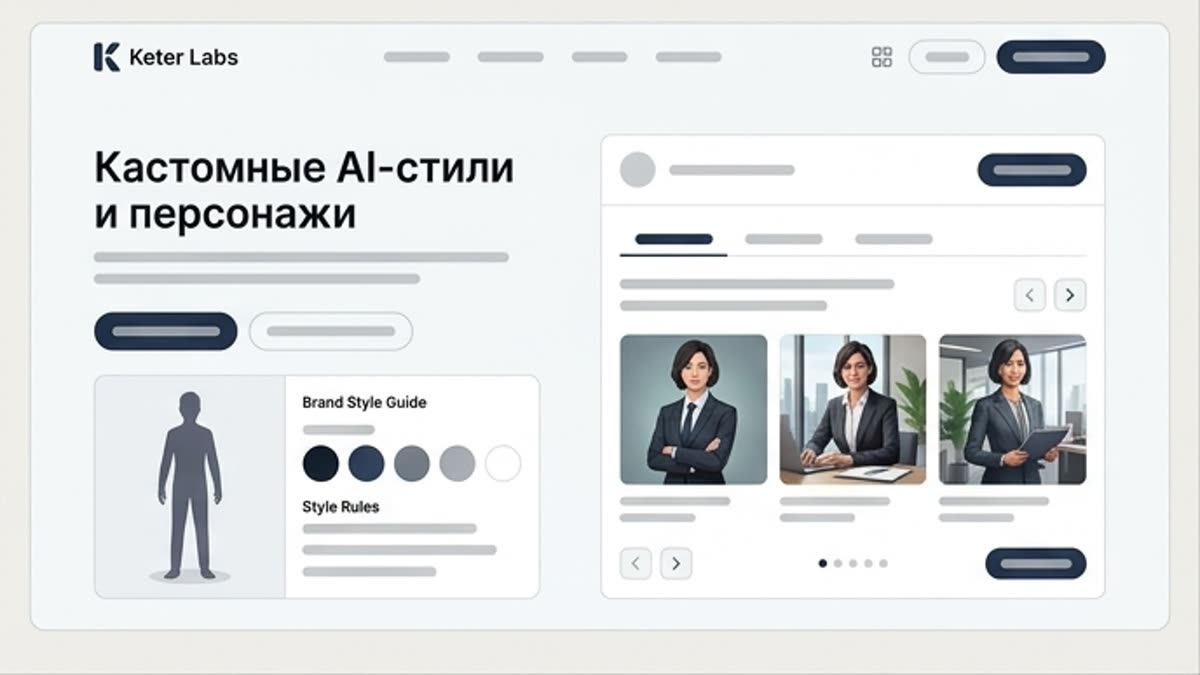
Character consistency is not just the face. The system should cover the role, wardrobe range, age markers, emotions, lighting, camera distance, and the contexts where the character appears.
The more precise the rules, the easier it is to produce campaign variants without the feeling that it is a new person every time.
Identity
Describe the visual traits that must always stay stable.
Range
Pin down what can change: pose, emotion, environment, wardrobe, and camera angle.
Constraints
Record the contexts, products, promises, and visual devices the character must never be associated with.
Build the style library from approved results
A good library is not theoretical. It grows out of work that has passed review: campaigns, product scenes, lighting that worked, strong prompts, and final exports.
Every saved style should come with an explanation: why it exists and where to apply it. A premium launch style should not be carried over automatically to support content or internal training.