The core problem
AI produces options fast, but the process often breaks down at approval
Teams rarely suffer from a shortage of ideas. More often, the work falls apart between different services, files, prompts, edits, versions, and chat messages.
A strong AI workflow treats generation as just one step. The point is not simply to get more drafts, but to take the best option all the way to a file you can review, fix, save, and use again.
A good process is boring in the right places: a clear brief, references, short batches of options, visible review points, and one place for final files.
Use five steps instead of a list of tools
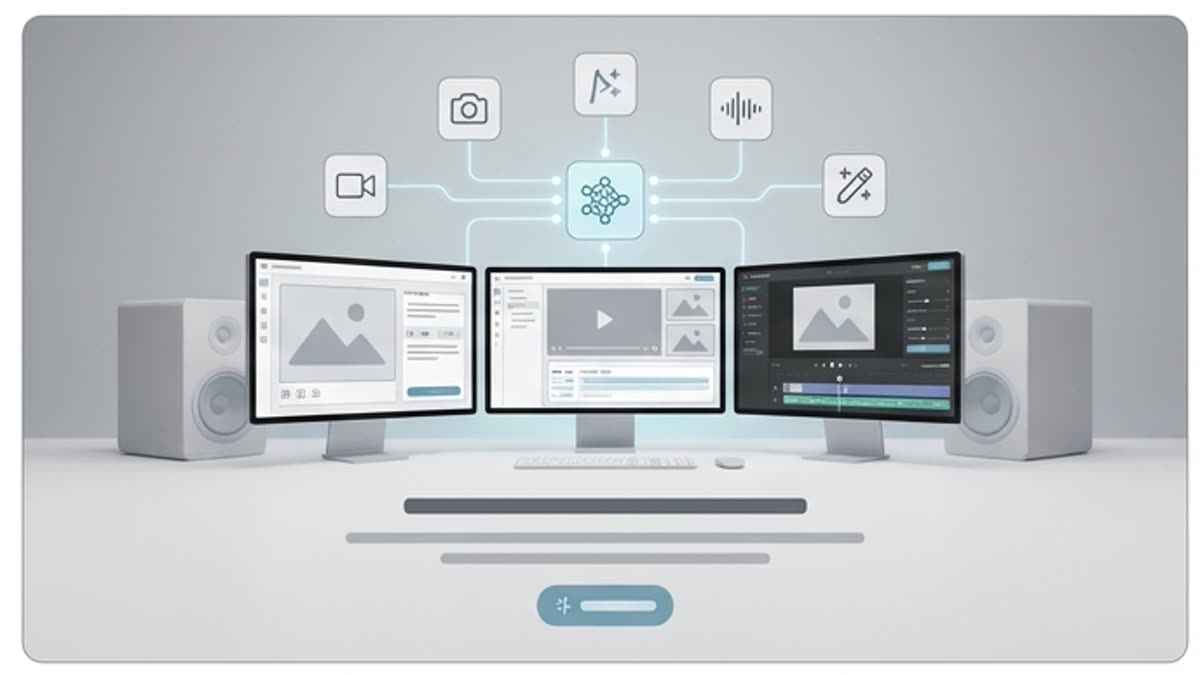
The working structure usually looks like this: brief, references, generation, refinement, and export. Each step has its own job, and the prompt does not try to replace the whole process.
This way the team understands faster what exactly it is reviewing: the idea, the style, the composition, the file quality, or readiness for a specific channel.
Brief
Describe the audience, channel, format, message, and the criteria the team will use to accept the result.
References
Collect brand examples, product shots, successful past work, and the things that must definitely be avoided.
Generation
Run small batches around a single hypothesis instead of trying to test every direction at once.
Refinement
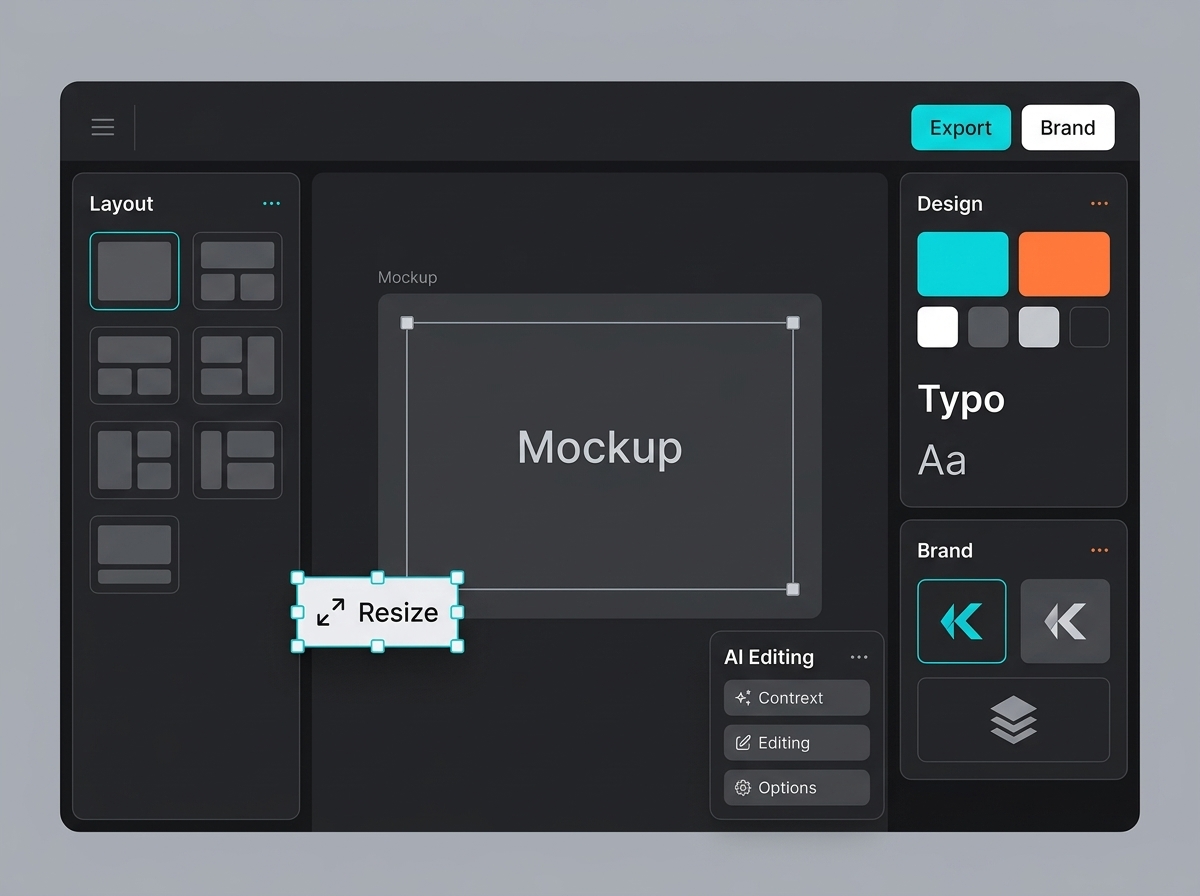
Use the editor, upscaling, background replacement, resizing, and retouching to turn a draft into a working file.
Export
Save the final versions, the prompt, the references, and the key edits in the project so the process can be repeated.
Separate creative decisions from production work
One person should not simultaneously invent the concept, write all the prompts, pick the best options, and prepare every size. An AI workflow scales when roles are separated.
The creative lead owns the idea and the quality bar. The producer keeps the process on track. Designers and editors finish the file. Assistants and agents can take on repetitive steps once the rules are clear.
Save not just the file, but the path to it
Every approved asset should leave a trail: the brief, the references, the model or tool, the key prompt wording, the edits, the sizes, and the approval notes.
That is how one successful campaign becomes a repeatable working template. Without it, the team starts from scratch every week and calls it an experiment.