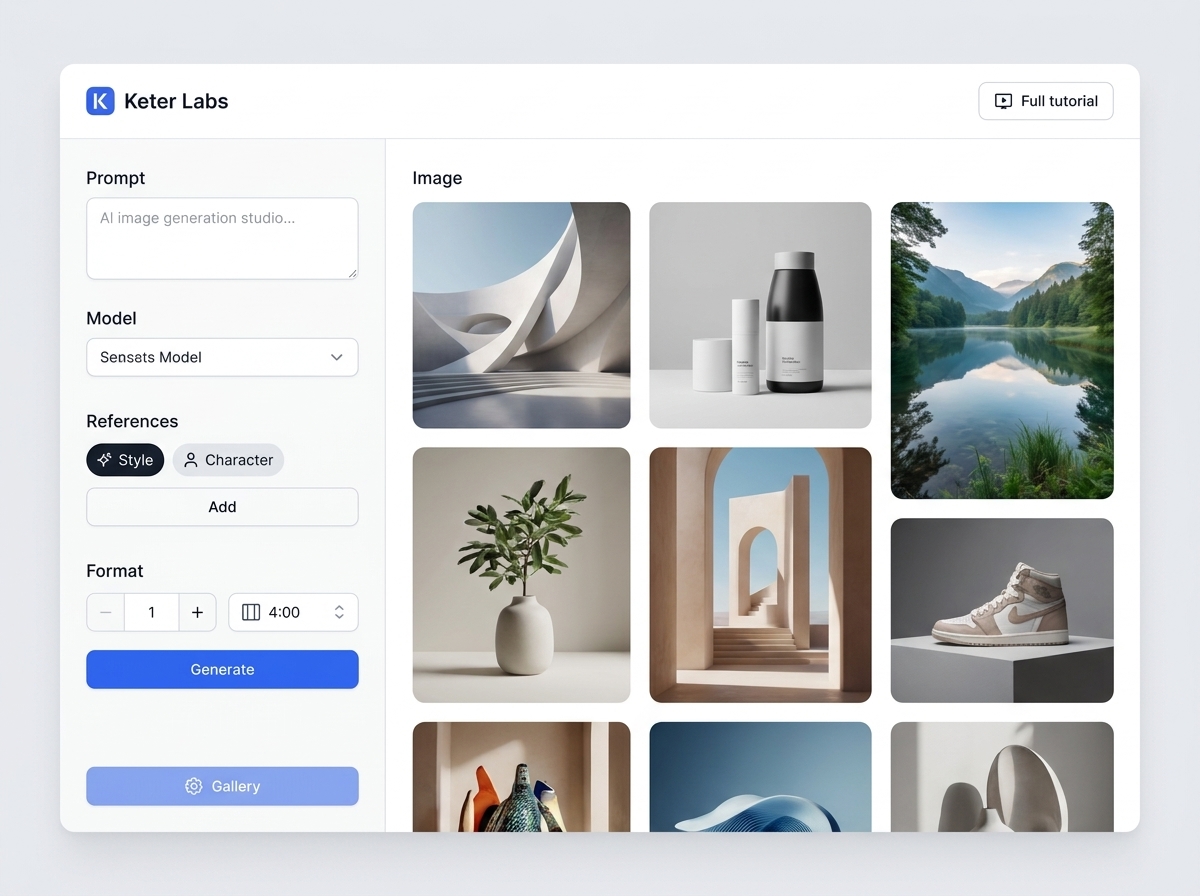
What this page covers
The main focus of this section: use access codes for closed or experimental tools. It helps you understand the tool's boundaries, the preparation, and the criteria for a finished result.
Documentation
The "Tool access codes" section gathers practical guidance on one topic: use access codes for closed or experimental tools. It helps you prepare materials, complete the steps in Keter Labs, check the limitations, and bring the result to a working state.
What's included
The section shows how to apply the topic in practice: use access codes for closed or experimental tools. It brings together the context, the sequence of steps, and the checks that help you use the page in real work.
Before you start, check a description of the situation, the account, access rights, the file, an error screenshot, and the expected result. This makes it easier to avoid repeated iterations, unnecessary credit charges, and confusion within the team.
Before handing the result over, review the cause of the problem, tool availability, plan limitations, email correctness, and the next step. Once these points are covered, the material or configuration is ready to use in your workflow.
When to use it
These examples make it easier to choose where to start and which nearby section to open next.
Open this page when the team needs to use access codes for closed or experimental tools. The section helps you quickly understand the sequence of steps without a long search through the help center.
The material is easy to share with colleagues: it explains the preparation, roles, checks, and expected result for the "Tool access codes" topic.
Use the section as a final checklist: the cause of the problem, tool availability, plan limitations, email correctness, and the next step should be clear before the task goes to a client, the team, or production.
Details
The main focus of this section: use access codes for closed or experimental tools. It helps you understand the tool's boundaries, the preparation, and the criteria for a finished result.
Start with the goal and input materials, then complete the steps in the interface and record important decisions. For this topic, a description of the situation, the account, access rights, the file, an error screenshot, and the expected result are especially important.
If the task is broader than one section, move on to the related topics: quick start, account settings, plans, access, and troubleshooting. This way you keep the context and assemble a complete workflow faster.
Workflow
Every section in Keter Labs follows the same shape: a clear brief, a fast first draft, refinement in the editor, and a result saved into the project.
Define the task and the expected result: use access codes for closed or experimental tools. Record who will use the final material or configuration.
Prepare a description of the situation, the account, access rights, the file, an error screenshot, and the expected result. If a team is working on the task, confirm roles and access in advance.
Complete the steps in Keter Labs and save the important parameters, versions, prompts, files, or links inside the project.
Before finishing, check the cause of the problem, tool availability, plan limitations, email correctness, and the next step; return to the related help sections if needed.
Related sections
The "Keter Labs help center" section collects practical guidance on the topic: find the right instructions on tools, plans, permissions, credits, the API and teamwork. The section helps you prepare materials, complete the steps in Keter Labs, check the limits and bring the result to a working state.
Open Keter Labs help centerThe "Quickstart" section brings together practical guidance on a single topic: how to get started in Keter Labs: create a project, choose a tool, add references and save your first result. It helps you prepare materials, complete the steps in Keter Labs, check the limitations and bring the result to a working state.
Open QuickstartThe "Projects" section brings together practical guidance on a single topic: how to organize files, versions, assets and results inside Keter Labs projects. It helps you prepare materials, complete the steps in Keter Labs, check the limitations and bring the result to a working state.
Open ProjectsThe "Troubleshooting" section gathers practical guidance on one topic: quickly diagnose errors with generation, access, files, payments, exports, and result quality. It helps you prepare materials, complete the steps in Keter Labs, check the limitations, and bring the result to a working state.
Open TroubleshootingReady when you are
Spin up assets, lock in versions and align your team around a single creative platform.
Create account