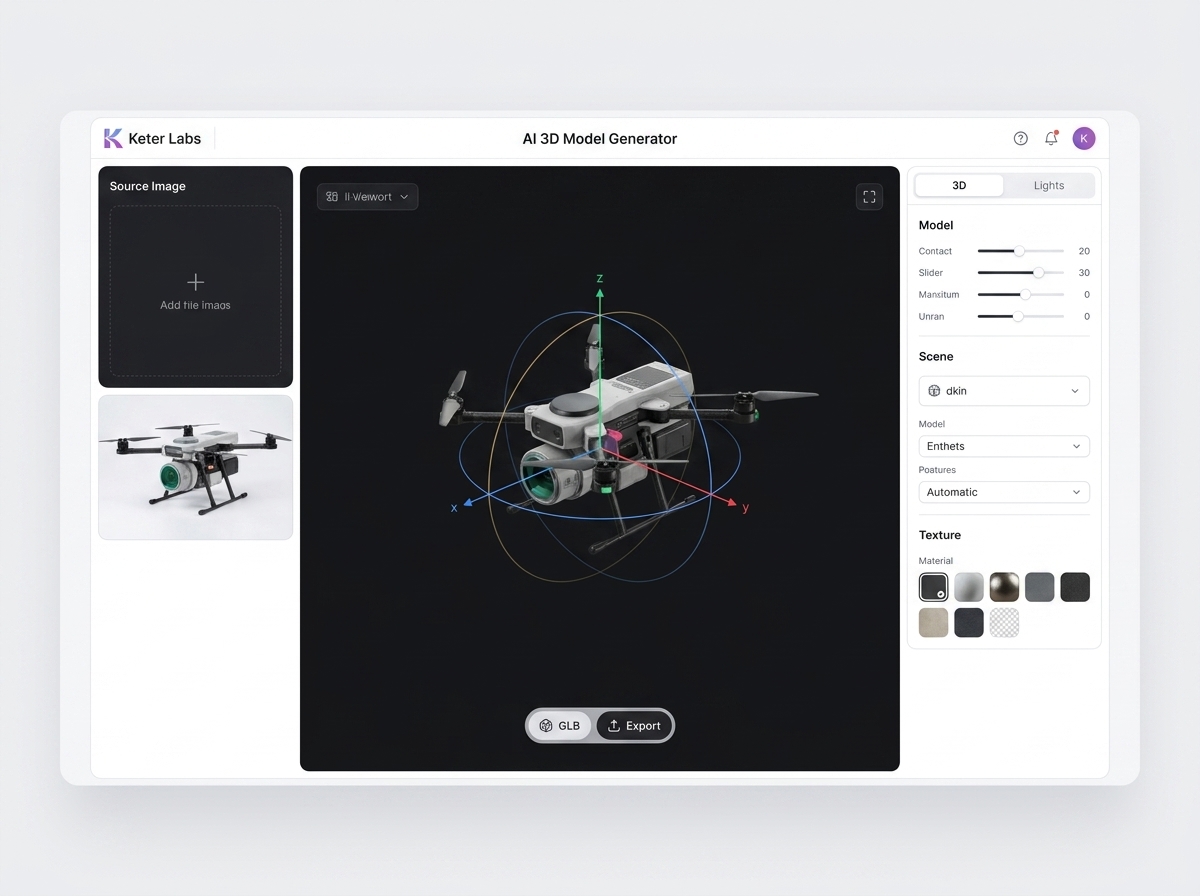
What to understand
The main idea of the section: assemble 3D scenes, add objects and use the space as a foundation for visual materials. It answers a practical user question and shows which limits to take into account in advance.
Documentation
3D scenes is practical Keter Labs guidance on how to assemble 3D scenes, add objects and use the space as a foundation for visual materials. The section helps you quickly understand the preparation, limits, order of steps and criteria for a finished result without a long search across different pages.
What's included
The page explains how to assemble 3D scenes, add objects and use the space as a foundation for visual materials. The user gets working context rather than a general overview: where to start, what to check and when to move on to the next step.
Before starting, prepare scene references, proportions, the set of objects, lighting style, camera and the required result format. This reduces the number of random iterations and helps the team agree on the result in advance.
After completing a step, check the composition, object scale, readability of the lighting, saved versions and the scene's readiness for generation or export. If these points are covered, the material, setting or process can safely be handed on.
When to use it
These examples make it easier to choose where to start and which nearby section to open next.
Open the section when you need to assemble 3D scenes, add objects and use the space as a foundation for visual materials but do not want to spend time searching for similar answers in different parts of the help content.
The material is easy to share with colleagues: it records the preparation, expected result, checks and the neighboring sections needed for a complete working process.
Use the page as a checklist: the composition, object scale, readability of the lighting, saved versions and the scene's readiness for generation or export should be clear before the task goes to a client, the team or production.
Details
The main idea of the section: assemble 3D scenes, add objects and use the space as a foundation for visual materials. It answers a practical user question and shows which limits to take into account in advance.
Start with the goal and input materials, then complete the steps in the interface and save decisions in the project. For this topic, scene references, proportions, the set of objects, lighting style, camera and the required result format are especially important.
If the task is broader than one section, move on to the related topics: 3D generator, Spaces, image-to-360 and the visual tools. This way the user keeps the context and assembles a complete working process faster.
Workflow
Every section in Keter Labs follows the same shape: a clear brief, a fast first draft, refinement in the editor, and a result saved into the project.
Define the specific task: assemble 3D scenes, add objects and use the space as a foundation for visual materials. Record who is responsible for the result and where it will be used.
Prepare scene references, proportions, the set of objects, lighting style, camera and the required result format. For team work, check roles, access and where materials are stored right away.
Complete the action in Keter Labs and save important parameters, versions, files, prompts or links inside the project.
Before finishing, check the composition, object scale, readability of the lighting, saved versions and the scene's readiness for generation or export; then move on to the related topics: 3D generator, Spaces, image-to-360 and the visual tools.
Related sections
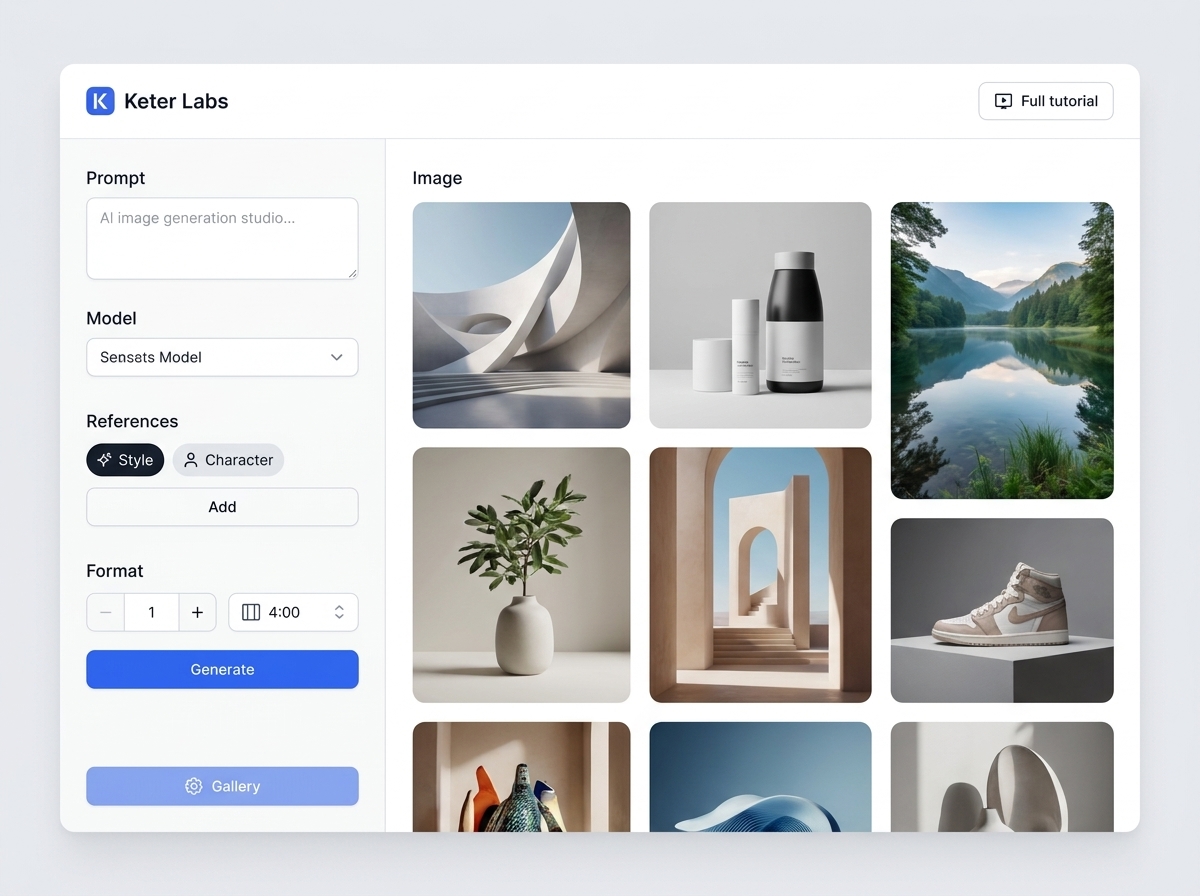
The "Keter Labs help center" section collects practical guidance on the topic: find the right instructions on tools, plans, permissions, credits, the API and teamwork. The section helps you prepare materials, complete the steps in Keter Labs, check the limits and bring the result to a working state.
Open Keter Labs help centerThe "Quickstart" section brings together practical guidance on a single topic: how to get started in Keter Labs: create a project, choose a tool, add references and save your first result. It helps you prepare materials, complete the steps in Keter Labs, check the limitations and bring the result to a working state.
Open QuickstartThe "Projects" section brings together practical guidance on a single topic: how to organize files, versions, assets and results inside Keter Labs projects. It helps you prepare materials, complete the steps in Keter Labs, check the limitations and bring the result to a working state.
Open ProjectsThe "Troubleshooting" section gathers practical guidance on one topic: quickly diagnose errors with generation, access, files, payments, exports, and result quality. It helps you prepare materials, complete the steps in Keter Labs, check the limitations, and bring the result to a working state.
Open TroubleshootingReady when you are
Spin up assets, lock in versions and align your team around a single creative platform.
Create account